
Operations automation · Astana · Almaty
Automating accounting, requests and production
We move inventory, production, requests and wholesale orders out of spreadsheets into one system connected to 1C. Management sees the figures right away, with less manual work and fewer errors.
- 2016
- year founded
- 35+
- projects for corporate clients
- 13
- industries
- 2
- offices: Astana and Almaty
01When you need it
Figures are compiled by hand, and decisions come late
Companies usually come to us when spreadsheets and manual entry can no longer keep up with the volume.
- 01Stock and recipes are tracked by hand, and costs are calculated in spreadsheets.
- 02Wholesale clients can only order through a manager.
- 03The head of the company compiles the key figures personally, from several sources.
- 04Requests and approvals go by email, and the status has to be chased by phone.
02What we build
Accounting built around your processes, not processes bent to fit the software
First we look at how production, inventory and sales actually work. Then we build a system that mirrors it.
Inventory and costs
Raw-material stock and the cost of every item. In one system instead of spreadsheets.
Recipes and recipe cards
Every item is described by a recipe and a recipe card. Ingredients, calories and macros are calculated from the recipe automatically.
B2B portals
Wholesale clients register with their BIN, order on their own and pay by invoice. Documents are in their account.
Management dashboards
Orders, output, costs and inventory on one screen. The figures come from accounting instead of being compiled by hand.
1C integration
Orders and stock levels flow between the system and 1C. No manual data transfer.
Requests and approvals
A request moves through stages, and each participant has their own role. The log shows who changed what and when.
03How we work
One contractor for the whole product
One team runs the whole path, from research to ongoing support. Every stage ends with a result you can see and sign off on.
Product path
- 01ResearchClarity on what we are building, for whom and why
- 02ArchitectureA work plan you can put a timeline on
- 03DesignMockups tested with users
- 04DevelopmentA working product, not a prototype
- 05LaunchPeople are using the product
- 06SupportThe product grows with the company
What drives the cost
- How many processes we automate: inventory, production, sales, requests
- How many roles and workstations
- Integration with 1C and other accounting systems
- Reports and management dashboards
- Moving data out of spreadsheets and training staff
The price depends on what the product includes. We estimate timeline and cost after a 2–4 week audit.
How we work
- One contractfrom idea to ongoing support
- One teamno subcontractors
- One point of accountabilityfor the entire result
04Projects
Production accounting and wholesale sales
Digital production of ready meals and the digital sales system of a food manufacturer.
-


Tasty
Ready meals on digital production records
Inventory, recipes, recipe cards, costing and automatic calorie and macro calculation for 80+ catalogue items.
View project -
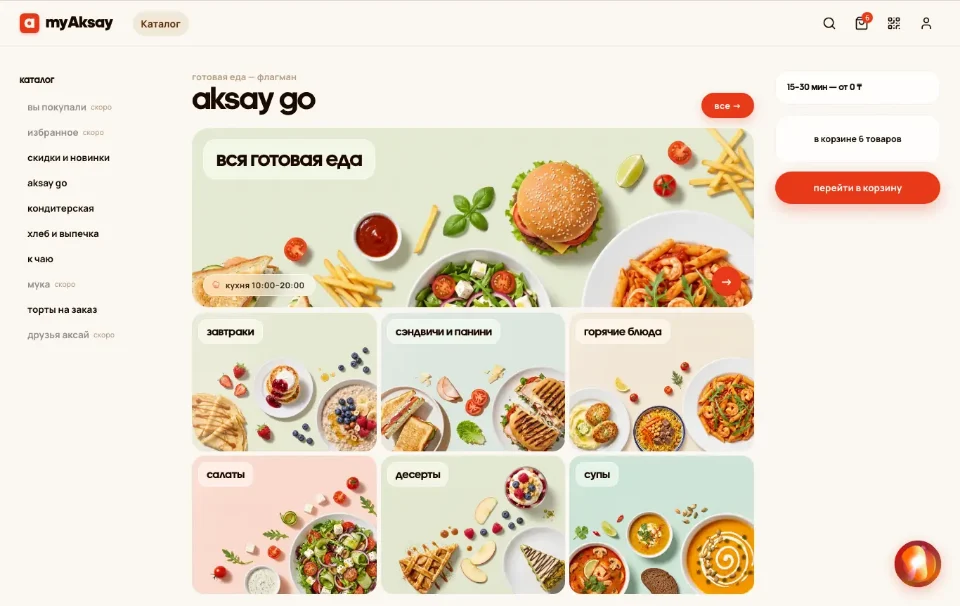

myAksay
A digital ecosystem for a food manufacturer
Wholesale without a manager, cafeteria menus with separate prices for employees, and an order path into 1C.
View project
05FAQ
Frequently asked questions about automation
Will we have to rebuild our processes around the system?
No. First we study the processes, then we build the system around them. In Tasty, accounting was built around real production, not the other way round.
Can we keep 1C?
Yes. The new system works alongside 1C: orders and stock levels are transferred without manual entry.
Who will see which data?
Access is granted by role: management sees the full picture, a manager sees their orders, an employee sees their own operations. Every action is logged.
Can we start with a single process?
Yes. It makes sense to start where there is the most manual work, such as inventory or wholesale orders, and add the rest based on data.
How much does automation cost?
It depends on the number of processes, roles and integrations. We estimate timeline and cost after a 2–4 week audit.